



New EU Machinery Regulation will apply from 20 January 2027
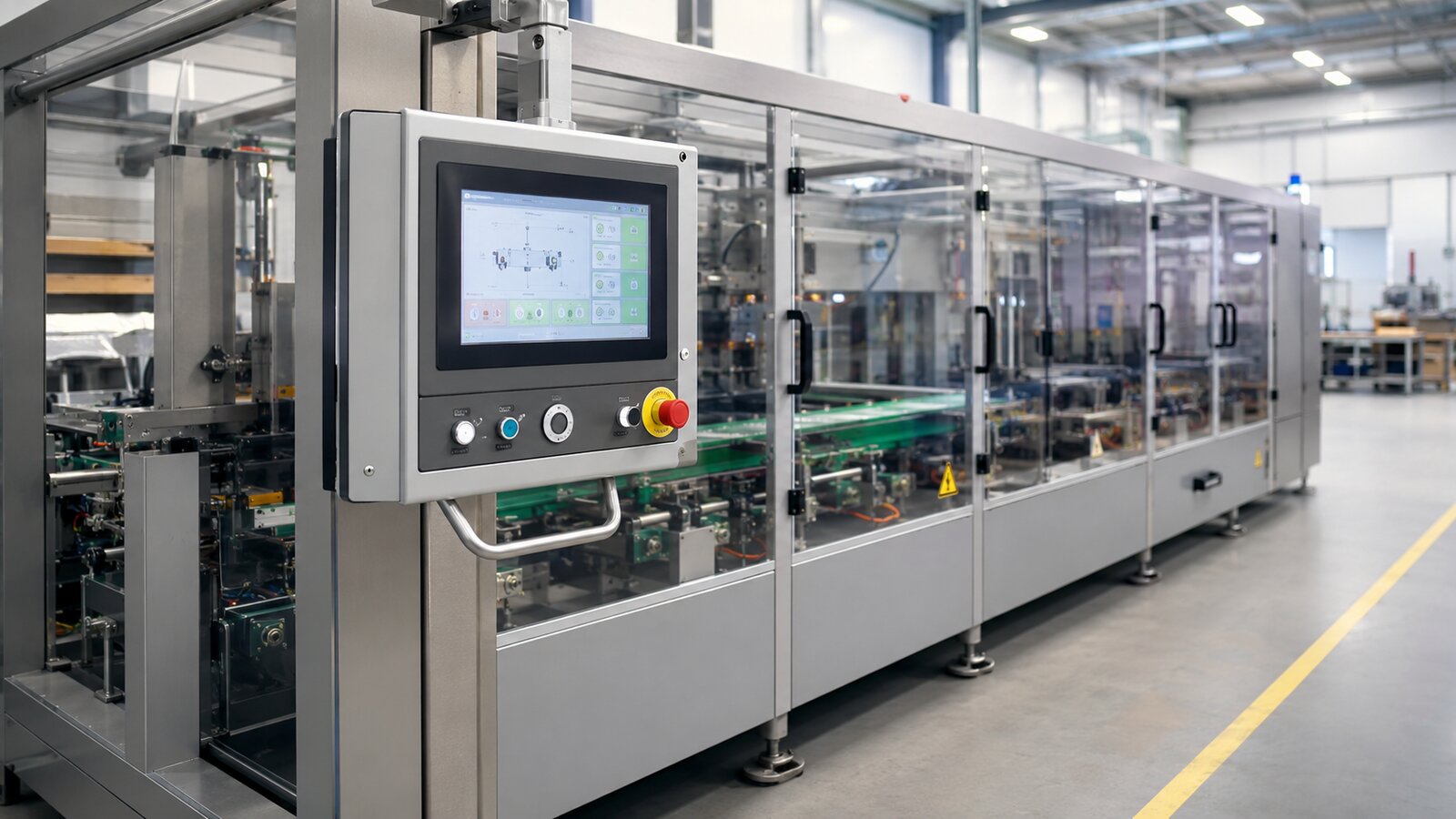
Regulation (EU) 2023/1230 will replace Directive 2006/42/EC and introduces new requirements concerning machinery safety, software, autonomous systems, cyber-related risks, technical documentation and substantial modifications.
Manufacturers of machinery should prepare for a major change in EU product legislation. From 20 January 2027, Regulation (EU) 2023/1230 on machinery will apply and replace the existing Machinery Directive 2006/42/EC.
The Regulation has already entered into force, but most of its substantive requirements will apply from 20 January 2027. Unlike a directive, the Regulation will apply directly and uniformly throughout the European Union.
For manufacturers, this is not simply a matter of replacing the legislative reference in the EU Declaration of Conformity. The Regulation reflects technological developments in modern machinery and specifically addresses software, autonomous systems, machine learning, remote control and new digital safety risks.
Artificial intelligence and autonomous machinery
The Regulation explicitly addresses machinery incorporating systems with fully or partially self-evolving behaviour or logic.
Where machine-learning approaches are used to perform safety functions, autonomous behaviour must not result in unpredictable or hazardous operation.
Among other requirements, machinery must remain within its defined task and movement space, safety functions must remain effective during autonomous operation, and changes to settings or rules during a learning process must not create hazardous situations. Relevant safety-related decision-making data may also need to be recorded.
Safety components with fully or partially self-evolving behaviour using machine-learning approaches to ensure safety functions are included among the higher-risk categories listed in Annex I, Part A.
Software and cybersecurity-related risks
Safety-related software will play a more significant role in machinery conformity assessment.
Technical documentation may need to include information on programming logic, system capabilities and limitations and the development, testing and validation processes used. Where necessary to verify compliance, competent national authorities may also request the source code or programming logic of safety-related software.
Manufacturers will also need to consider risks associated with network connections, remote access, software changes and unauthorised interference with control systems.
Where a digital or cyber-related intervention can result in hazardous movement, change a safety parameter or compromise a safety function, it must be considered as part of the overall machinery risk assessment.
Substantial modification may create a new manufacturer
Regulation (EU) 2023/1230 expressly introduces the concept of a substantial modification.
Where machinery already placed on the market or put into service is modified physically or digitally in a way not foreseen by the original manufacturer and the modification creates a new hazard or increases an existing risk requiring significant new protective measures, the modification may be considered substantial.
The person or company carrying out such a modification may then be regarded as the manufacturer and become responsible for carrying out a new conformity assessment and demonstrating compliance of the modified machinery.
This will be particularly relevant for upgrades of production lines, replacement of control systems, addition of robots, automation projects and major software modifications.
Changes to conformity assessment procedures
The previous list of higher-risk machinery is replaced by Annex I, which is divided into Part A and Part B.
For certain higher-risk categories listed in Part A, conformity assessment based solely on internal production control will no longer be available. An appropriate procedure involving a notified body or an approved quality assurance system will be required.
Manufacturers should therefore determine in advance whether the classification of their machinery and the applicable conformity assessment procedure will change under the new Regulation.
Digital instructions and EU Declaration of Conformity
The Regulation also modernises product documentation.
Instructions for use may be supplied digitally under defined conditions. The manufacturer must ensure that the instructions can be downloaded, stored and printed and that they remain accessible online for the expected lifetime of the machinery and for at least ten years after it has been placed on the market.
The EU Declaration of Conformity may also be made available digitally through an internet address or machine-readable code.
What should manufacturers prepare before January 2027?
Manufacturers should review, in particular:
- machinery risk assessment,
- safety-related control systems and software,
- digital and cybersecurity-related safety risks,
- autonomous functions, sensors and machine-learning systems,
- technical documentation,
- the applicable conformity assessment procedure,
- instructions and safety information,
- EU Declaration of Conformity and CE marking.
Machinery placed on the market in accordance with Directive 2006/42/EC before 20 January 2027 may continue to be made available. Machinery placed on the EU market from that date will generally need to comply with Regulation (EU) 2023/1230.
Machinery conformity assessment under Regulation (EU) 2023/1230
PRVÁ CERTIFIKAČNÁ provides professional services in the field of machinery conformity assessment. We review and prepare technical documentation, machinery risk assessments, instructions and labelling, identify applicable harmonised standards and prepare EU Declarations of Conformity.
Manufacturers developing machinery that is expected to be placed on the market in 2027 should consider the new requirements already during the design and documentation process.